Accounting 3 Way Match: A Practical Guide for Finance Teams
Learn how the accounting 3 way match works, what it catches, how to handle exceptions, and where automation fits. A practical guide for finance teams.
The supplier wants payment, the invoice is sitting in the shared inbox, and we're trying to finish month-end. Purchasing says the order was approved. Someone in the warehouse remembers a delivery, but there's no receiving record attached. We don't yet have enough evidence to approve the bill confidently.
Table of Contents
- A Familiar Approval Bottleneck
- What the Three Documents Actually Are
- How the Match Works Step by Step
- Exceptions You Will Actually See
- What This Control Actually Catches
- Extending the Match to the Bank Statement
- Choosing How to Run the Match
- A Short Checklist for Your Next Close
A Familiar Approval Bottleneck
A familiar approval queue can look deceptively tidy. Each invoice has a supplier name, a due date, and an approver assigned. Yet the same question keeps coming back: did we receive what we're being asked to pay for?
Without a defined control, we chase that answer through emails, packing slips, and conversations. A manager's approval might confirm that the purchase made business sense, but it doesn't necessarily establish the quantity delivered or the agreed unit price.

Replace reassurance with evidence
An accounting 3 way match is a pre-payment comparison of the purchase order, receiving record, and supplier invoice. It links purchasing authorization, operational receipt, and financial settlement, with payment normally approved when the records agree exactly or within predefined tolerances, as explained in GEP's accounts-payable matching guide.
The practical improvement is not another approval box. We give the buyer, receiving team, and accountant a shared basis for deciding whether the bill is ready.
- Purchasing supplies the authorized terms. We shouldn't have to reconstruct the agreement from a supplier's invoice.
- Receiving supplies delivery evidence. A verbal recollection isn't a substitute for a recorded receipt.
- Accounts payable evaluates the differences. We distinguish missing information from a genuine billing dispute.
Practical rule: Approving the business purpose of a purchase isn't the same as verifying the supplier's bill.
Three-way matching won't remove waiting when receiving records are missing. It makes the reason for waiting visible and gives us a specific person to contact. Instead of asking whether someone can approve an invoice, we ask whether receiving can confirm the delivery or purchasing can resolve the price difference.
That's a much more useful conversation during close.
What the Three Documents Actually Are
The documents answer different questions. Treating them as interchangeable is where junior colleagues often get confused: a supplier can send a perfectly formatted invoice without proving either our authorization or their delivery.
The evidence behind each document
The purchase order, usually shortened to PO, records the organization's approved commitment. It establishes the supplier, item, quantity, agreed price, and commercial terms.
The goods receipt, also called a receiving report, goods-receipt note, or product receipt, records what was delivered and accepted. It comes from the receiving activity, not from the supplier's billing request.
The supplier invoice states what the supplier wants us to pay. Understanding what information belongs on an invoice helps us identify usable matching fields, but an invoice remains a request rather than independent delivery evidence.
| Document | Question it answers | What it doesn't establish alone |
|---|---|---|
| Purchase order | What did we authorize? | Whether delivery happened |
| Receiving record | What did we receive and accept? | Whether the supplier billed correctly |
| Supplier invoice | What is the supplier charging? | Whether the charge is authorized and fulfilled |
A sound comparison checks item identity, quantity, unit price, tax or freight treatment, payment terms, and total amount. The Ohio Office of Budget and Management's matching paper describes this document-based verification as a means of preventing incorrect or fraudulent payments.
When the receiving leg adds value
Two-way matching compares the invoice with the PO, without the receiving leg. It may be more appropriate for utilities, subscriptions, and recurring fixed-fee services that use contract-based approval rather than a physical goods receipt.
We shouldn't manufacture a meaningless warehouse receipt for a subscription just to make the process look consistent. Instead, we choose evidence that fits the purchase and document the approval method.
For physical goods, the receiving leg answers a question the other documents can't: did the supplier fulfill the order? An invoice and PO can agree perfectly while the delivery remains incomplete. That's why comparing only their totals can give us false confidence.
How the Match Works Step by Step
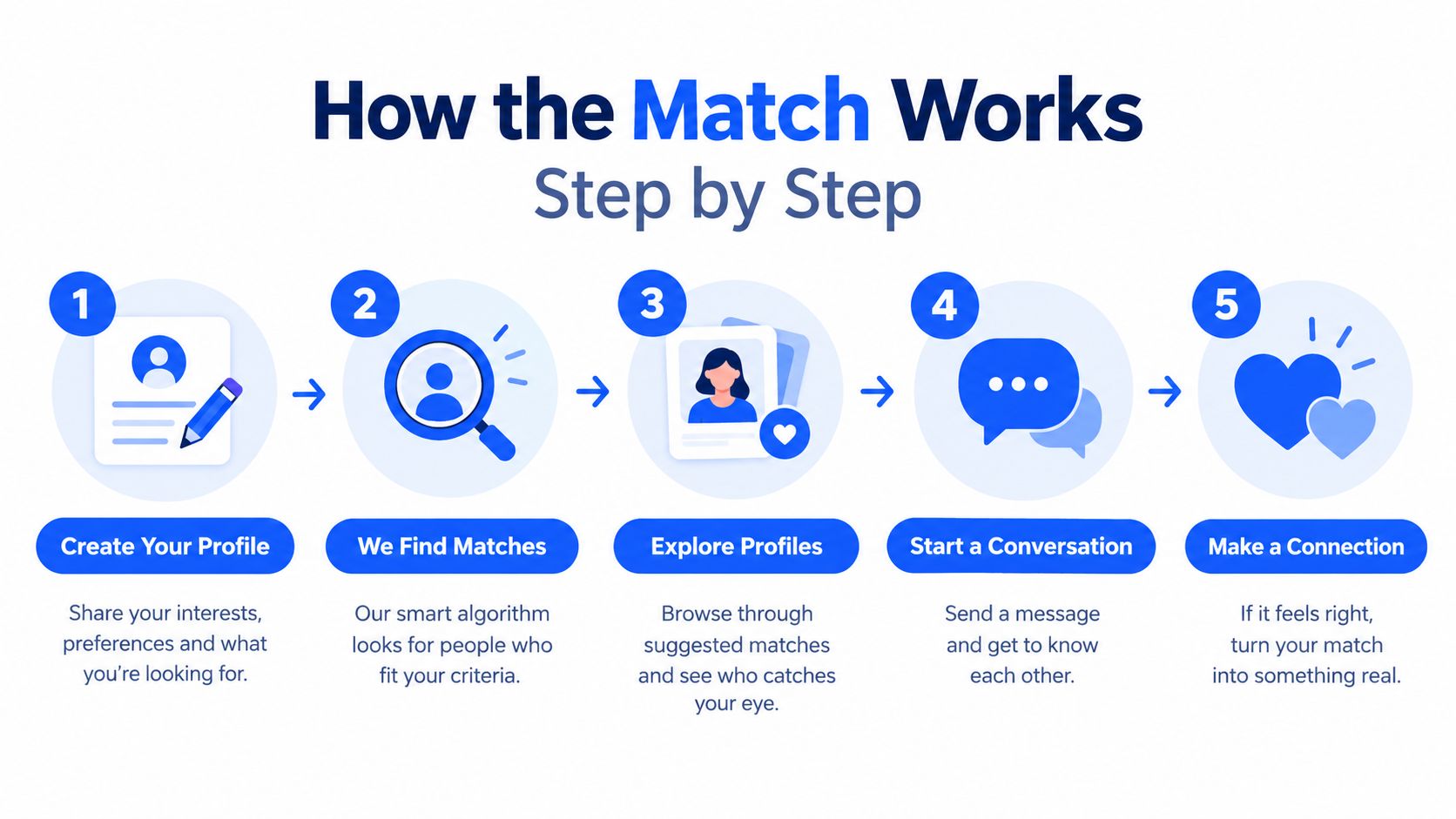
Consider this illustrative purchase, not a reported customer transaction: we authorize 200 units at $12.50, receiving records 198 units, and the supplier invoices 200 units. The invoice price agrees with the order, but the billed quantity exceeds the recorded receipt.
We shouldn't call that a successful match merely because the supplier used the approved price.
Follow the transaction through the system
Locate the authorized order. We connect the invoice to the correct supplier and PO lines. A similar description isn't enough if it refers to a different item or order.
Locate the applicable receipt. We use the receiving record associated with the billed delivery. We also check whether earlier invoices have already used that receipt quantity.
Compare price and quantity separately. In our example, price passes while quantity fails. Microsoft Dynamics 365's documented validation mechanics compare invoice net unit price with PO net unit price and invoice quantity with matched product-receipt quantity.
Review the remaining commercial fields. We check tax, freight, payment terms, and the resulting total rather than assuming a price-and-quantity comparison covers everything.
Apply the documented decision rule. The invoice either clears, enters exception review, or remains blocked pending resolution.
Understand the accounting timing
In an inventory workflow, recording receipt commonly creates an accounting trail involving inventory and a goods-received/invoice-received clearing account before invoice posting. The clearing account bridges the timing difference between recording delivery and recording the supplier's liability; the precise entries depend on the system's configuration.
Don't confuse an invoice hold with an absence of accounting activity. We may already have recorded receipt even though the invoice isn't approved for payment.
Tolerance bands determine which permitted differences can clear automatically. We should define them by risk and variance type, not widen them simply because the approval queue is busy.
A tolerance is permission to accept a defined difference, not permission to stop investigating missing evidence.
For this example, we hold the payment until the shortage is explained under the applicable policy. Receiving may have entered the delivery incorrectly, or the supplier may need to correct its invoice. We don't change the receipt to the billed quantity merely to force agreement.
A partial delivery also needs careful treatment. We should preserve the outstanding order balance rather than treating a legitimate incomplete shipment as a completed purchase.
Exceptions You Will Actually See
An exception queue is most useful when it tells us why invoices need intervention. A list of unpaid bills without root-cause labels tells us very little about which upstream process needs attention.
Benchmark reporting places average AP exception rates around 18.4%, best-in-class performance near 9%, and a separately reported high-performing median around 5%, with differing methodologies and populations making those figures unsuitable for direct comparison, as summarized in Mindsprint's accounts-payable KPI guidance.
Common Three-Way Match Exceptions and Likely Causes
| Exception type | What it usually signals | First control to tighten |
|---|---|---|
| Quantity variance | Delayed receiving, entry error, or incomplete delivery | Timely receipt entry and delivery identification |
| Price variance | Stale PO pricing or an unrecorded commercial change | Approved price maintenance |
| Missing receipt | Delivery evidence wasn't recorded or attached | Receiving ownership and document completeness |
| Invalid or closed PO | Incorrect reference or an unresolved order-status issue | PO reference validation and closure review |
| Duplicate invoice number | Resubmission, reused numbering, or possible duplicate billing | Supplier-specific duplicate checks |
| Tax or freight mismatch | Different treatment from the authorized terms | Explicit PO fields for additional charges |
| Supplier-data error | Inconsistent identity, entity, or currency information | Supplier master-data validation |
These are diagnostic possibilities, not automatic conclusions. A quantity exception doesn't prove the warehouse made a mistake, and a price exception doesn't prove the supplier overcharged us.
Measure the queue before changing the rules
Calculate the exception rate as invoices requiring human correction or resolution divided by invoices processed. Then segment the results by cause, supplier, requester, and receiving location where those distinctions are useful.
- Assign the right owner. Receiving investigates delivery evidence; purchasing investigates commercial terms; AP coordinates the invoice's disposition.
- Record the actual resolution. Distinguish a corrected invoice from a corrected receipt or an approved variance.
- Fix recurring inputs. Train suppliers and requesters, require usable PO fields, and improve receipt timing before loosening tolerances.
We should preserve the source documents, fields compared, tolerance decision, reviewer identity, and final disposition in our accounting process. Sending an invoice to someone's inbox isn't a complete resolution record.
The most revealing question is whether we're repeatedly correcting the same problem. If so, faster review might help today's queue, but correcting the source of the error is the better long-term control.
What This Control Actually Catches
Three-way matching is a purchasing and invoice-validation control. Calling it a complete payment-fraud solution overstates what the documents can establish.
The 2025 AFP Payments Fraud and Control Survey found that 79% of organizations experienced payment-fraud attacks or attempts during 2024; separate survey figures cited in the same industry coverage report that 41.4% of finance professionals encountered as many as 10 duplicate invoices monthly, while 44% encountered higher frequencies, according to Klippa's coverage of three-way matching and payment risks.
What we can challenge before payment
The control gives us a documented basis for questioning several common errors and abuse patterns:
- Goods not received. The invoice lacks corresponding operational evidence.
- Inflated quantities. The supplier bills beyond the applicable delivered quantity.
- Unauthorized prices. The billed rate differs from the approved purchase terms.
- Repeat billing. Duplicate checks and cumulative invoice tracking identify a purchase or receipt already billed.
The last point needs qualification. Comparing the same documents again won't necessarily catch a duplicate unless we also check invoice identity and previously invoiced quantities. A duplicate can look internally consistent.

This illustration isn't evidence of accounting-control effectiveness; its displayed percentages shouldn't inform payment decisions.
Where the protection ends
A genuine invoice can match its purchasing documents while someone has substituted fraudulent bank details. An approver can also be manipulated into bypassing normal checks, or unreliable supplier onboarding can undermine the identity behind otherwise consistent paperwork.
We therefore need separate controls over supplier creation, bank-detail changes, and payment release. The fraud-exposure figure above describes attacks and attempts, not losses prevented by matching.
Control boundary: Agreement between documents doesn't independently validate the destination of the payment.
We also shouldn't assume matching can rescue evidence that nobody verified. If purchasing creates an unauthorized order and receiving records goods without checking delivery, AP may receive a consistent but unreliable document set.
Disciplined PO creation, accurate receiving, and consistent supplier data determine how much confidence we can place in the result. Automation applies the rules; our colleagues still have to create trustworthy inputs.
Extending the Match to the Bank Statement
Invoice approval and cash settlement are different events. A completed match supports the decision to pay, but we still need to establish whether the intended payment cleared and whether the accounting record reflects that settlement.
Minnesota's state accounting policy records receipt after supplies or services arrive and the packing slip is available, but before the invoice is received, then completes the match before the accounting system issues payment, illustrating how receiving timing drives the control sequence in Minnesota's three-way-match policy.
Connect the approval to cleared cash
We recommend retaining a connection from the approved invoice and payment record to the relevant bank transaction. A practical review considers:
- Remittance reference and supplier identity. Use the payment record to bridge any abbreviated bank description.
- Currency and amount. Identify exchange differences or charges rather than treating every amount difference as an invoice error.
- Value date and payment status. Distinguish a scheduled payment from a cleared transaction.
- Partial and split payments. Track allocations so an installment doesn't appear to settle the whole invoice.
- Possible duplicate settlements. Investigate repeat debits even when the invoice itself was entered only once.
For batch payments, a bank debit may relate to several invoices. We need the payment batch or remittance detail to explain that relationship, not a forced one-to-one match based solely on amount.
Validate the statement data independently
When a statement arrives as a PDF, converted spreadsheet rows can make the comparison easier to review. We should look for consistent dates, descriptions, credit and debit fields, currency information where available, and balances that can be checked against the original statement.
Run this accuracy check before relying on the extracted rows:
Opening balance + credits − debits = closing balance.
Confirm the statement's sign convention and check individual transactions too. A balanced total doesn't prove that every description, date, or allocation is correct.
This is a separate layer of bank statement reconciliation, not another goods-receiving document. Bank evidence can support the conclusion that cash left the account, but it can't prove goods arrived.
Retain the reviewed statement, conversion output, allocation explanation, and reviewer sign-off in the organization's records. An ambiguous reference should remain unresolved until we have supporting evidence, rather than becoming a confident match because the amount looks familiar.
Choosing How to Run the Match
The right approach depends on transaction complexity and the team's ability to maintain evidence, not on whether a tool carries an automation label. We can run a disciplined manual process, or configure an expensive system badly.
| Approach | Where it can fit | Main trade-off |
|---|---|---|
| Manual spreadsheet matching | A small, manageable invoice workload | Limited setup, but reviewers must enforce rules and preserve evidence themselves |
| Existing ERP matching | Purchasing, receiving, and AP records already reside together | Structured comparisons require configuration, testing, and ongoing data maintenance |
| Lightweight automation layer | Particular capture or comparison tasks create avoidable manual work | Less rekeying, but the team must verify scope, outputs, and ownership |
Choose the process we can sustain
For spreadsheet matching, we recommend explicit columns for document references, compared fields, exceptions, owners, and disposition. The weak point is often not calculation but coordination: colleagues overwrite entries, work from different copies, or approve without attaching the evidence.
An ERP can support more consistent comparison and exception handling when configured appropriately. Microsoft Dynamics 365 provides a concrete example of documented price-and-quantity validation, but we still need to test our own system's behavior for partial receipts, holds, and overrides.
- Compare setup effort. Include data cleanup and policy decisions, not just software configuration.
- Test exception visibility. Reviewers should understand the difference and identify who can resolve it.
- Assess evidence preservation. Check how the accounting process retains documents and decisions.
- Assign maintenance ownership. Supplier records, rules, and access shouldn't become nobody's responsibility.
A lightweight extraction tool can prepare spreadsheet-ready data without operating the approval control. Keep those functions separate when evaluating products.
Our preferred starting point is to define the decision rules and evidence requirements first. Then choose the least complicated approach that can apply them consistently and leave another accountant able to understand the result.
A Short Checklist for Your Next Close
Before signing off the payment batch, we should ask questions that test the quality of our judgment, not just whether every invoice has a status.
- Is authorization genuine? Confirm that applicable purchases followed the approved purchasing policy.
- Are receipt records dependable? Identify unresolved delivery evidence rather than accepting administrative completion.
- Are tolerances defensible? Decide whether they reflect risk or merely reduce the queue.
- Are master-data differences understood? Pay attention to supplier identity, item codes, units of measure, entity, and currency.
- Can we explain each exception's resolution? Another reviewer should be able to follow the decision without reconstructing conversations.
- Does settlement evidence support the accounting? Review allocations, outstanding payments, and repeat debits separately from invoice approval.
- Has extracted statement data passed review? Apply the balance equation and transaction checks described above before relying on it.
Strict matching can create unnecessary work; permissive matching can conceal meaningful differences. We need a documented reason for where we draw that line.
Use that judgment alongside a review of how to calculate the accounts payable balance. A well-supported close connects approved obligations, resolved exceptions, and actual settlement without confusing them.
autobankstatement converts digital, scanned via OCR, and password-protected PDF bank statements into CSV or Excel/XLSX for the independent settlement review described above. Visit autobankstatement to try a free guest preview before payment and prepare statement rows we can check against approved invoices and payment records.
Convert your next statement in minutes
Upload a bank statement PDF — digital, scanned, or password-protected — preview the extracted table, and download clean CSV or Excel.