Types of Invoicing: 8 Models Compared for Bookkeepers
Compare 8 types of invoicing, with use cases, pros, cons, and bookkeeping steps for net-term, milestone, retainer, progress, and usage billing.
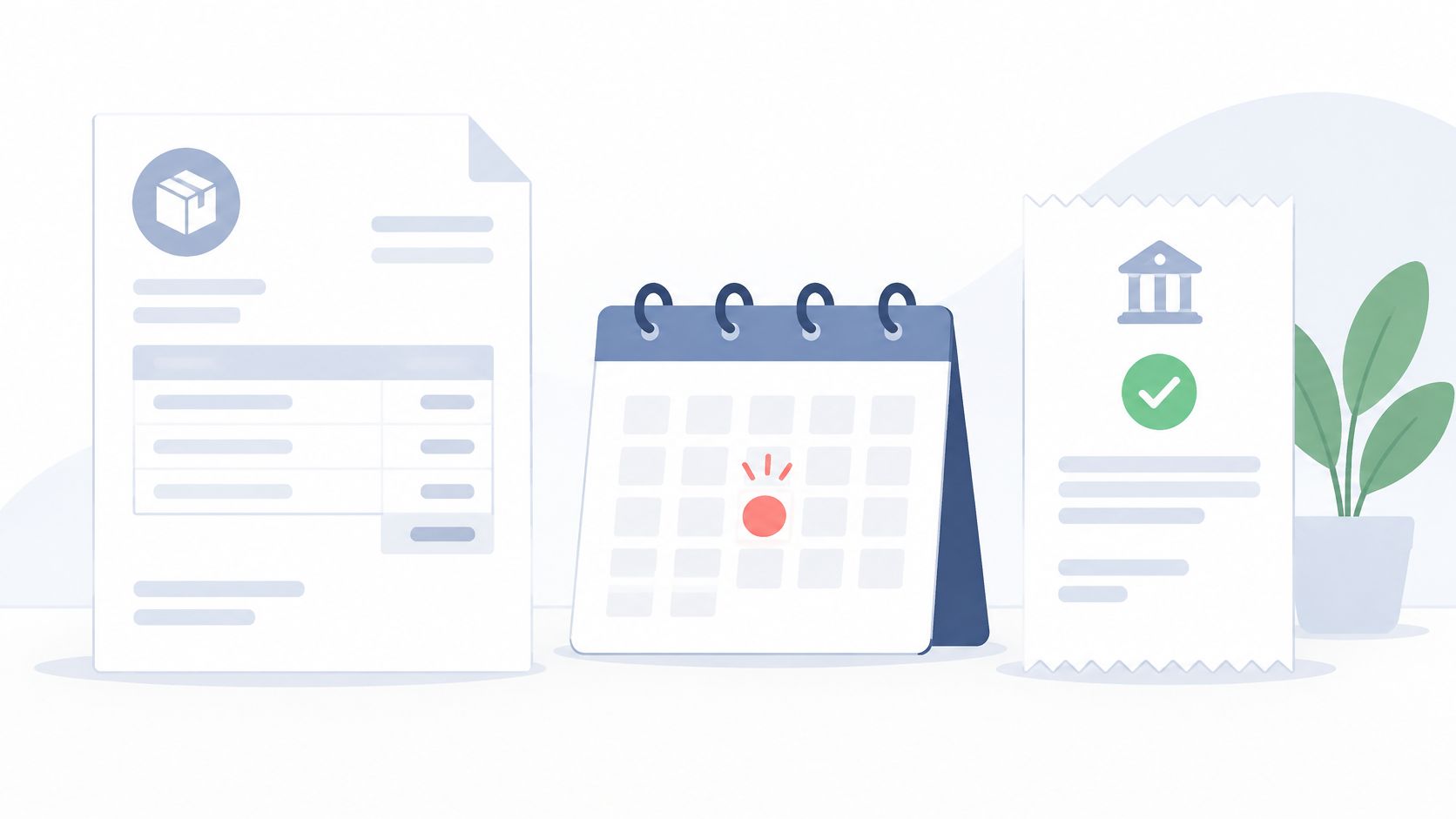
The deposit is in. The invoice that should explain it is still open, and the amounts do not agree.
Month-end is open on the screen. A credit posted on the 28th. The invoice is dated the 2nd, the total is different, and the aged receivables report still shows the item. We pull the statement, the invoice register, and the remittance. The gap does not close. Sometimes the client paid two invoices together. Sometimes a processor took a fee. Sometimes retainage never left the payer's account. The billing model, not the bookkeeper, usually decides why. The statement wins that argument every time.
These types of invoicing are matching patterns. Net terms, subscriptions, milestones, time and materials, retainers, progress applications, metered usage, and consolidated statements each tell the bank something different about timing and amount. The bank statement remains the authoritative record of cash received. Invoice dates are billing events. Deposit dates are cash events.
We do not edit the invoice so the deposit looks tidy. We name the fee, the retainage, the unearned retainer, or the line that fell outside the cutoff.
Each model below is judged the way we judge a reconciliation file. You will see the use case, what holds up, what fails, and the bookkeeping check that confirms the match.
Table of Contents
- 1. Standard Net-Term Invoicing
- 2. Recurring Subscription Billing
- 3. Milestone Billing
- 4. Time-and-Materials Billing
- 5. Retainer Billing
- 6. Progress Billing
- 7. Usage-Based Metered Billing
- 8. Consolidated Periodic Billing
- How the eight invoicing types compare for bookkeeping
- Matching Each Invoicing Model to Its Bank Record
1. Standard Net-Term Invoicing
This is the arrangement we clear most months. The seller issues one invoice for goods or services already delivered and sets a window such as Net 30 or Net 60. The document carries the invoice number, the issue date, the lines, the tax, and the due date. We expect one bank credit to retire one open invoice.
A consulting firm bills a finished engagement on Net 30. A wholesaler bills a retailer for a shipment from the same week. Customers pay late, early, or inside a lump sum, so the deposit date drifts from the invoice date. That drift is normal. The statement, not the due date, is the cash record.
The European Commission memo on electronic invoicing calls for a sequential number that uniquely identifies the invoice, plus the issue date, the parties, the VAT figures, and the unit price excluding tax. We put that number in the payment reference. Without it, a batch deposit cannot be split with confidence.
Staff still mix a paid-on-the-spot sale with an open receivable. The sales receipt versus invoice guide is what we use to stop that mix-up.
- Match the reference: The invoice number belongs on the remittance advice.
- Prove the statement: Opening balance plus credits minus debits must equal the closing balance before we post.
- Watch aging: Follow up before the due date, while the gap is still timing and not a dispute.
2. Recurring Subscription Billing
Recurring subscription billing charges on a fixed rhythm, monthly or yearly, for continued access. The invoice generates itself. A card or a direct debit collects the cash. When the amount and the date stay put, this is the easiest file we close.
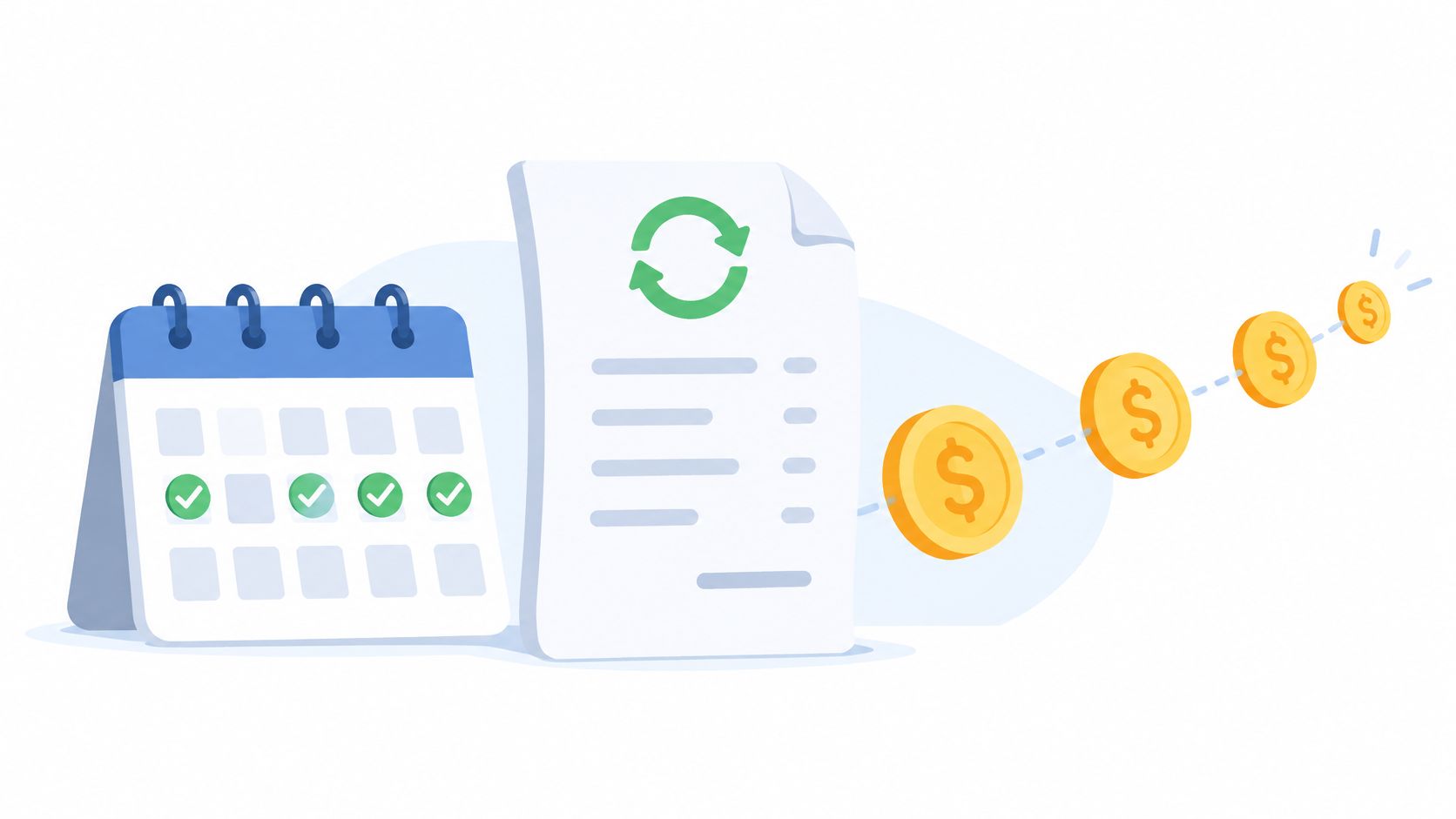
A software company bills monthly seats, and the processor pays out every week. The invoice total is not the deposit. The payout is gross billings minus fees, refunds, and chargebacks, often several days bundled together. A membership body collecting annual dues by direct debit is cleaner. One instruction, one credit, same amount. Failed payments, prorations, and plan changes are where the cycle stops being predictable.
In a 2024 Sage survey of more than 9,000 businesses, firms using e-invoicing reported a 44% reduction in invoice-processing time. The gain sits in the workflow, not in emailing a PDF. We still refuse to post a processor payout as if it were the invoice.
Payouts versus gross billings
We tie the payout back to gross invoice totals and book fees as their own expense. Each month we read failed payments and refunds before we touch income. Then we compare the bank total for that cycle with the subscription report. The same tie-out is laid out in our bank statement reconciliation walkthrough.
A short deposit against a matching subscription report means fees or failures, not a pricing error, until the processor report says otherwise.
3. Milestone Billing
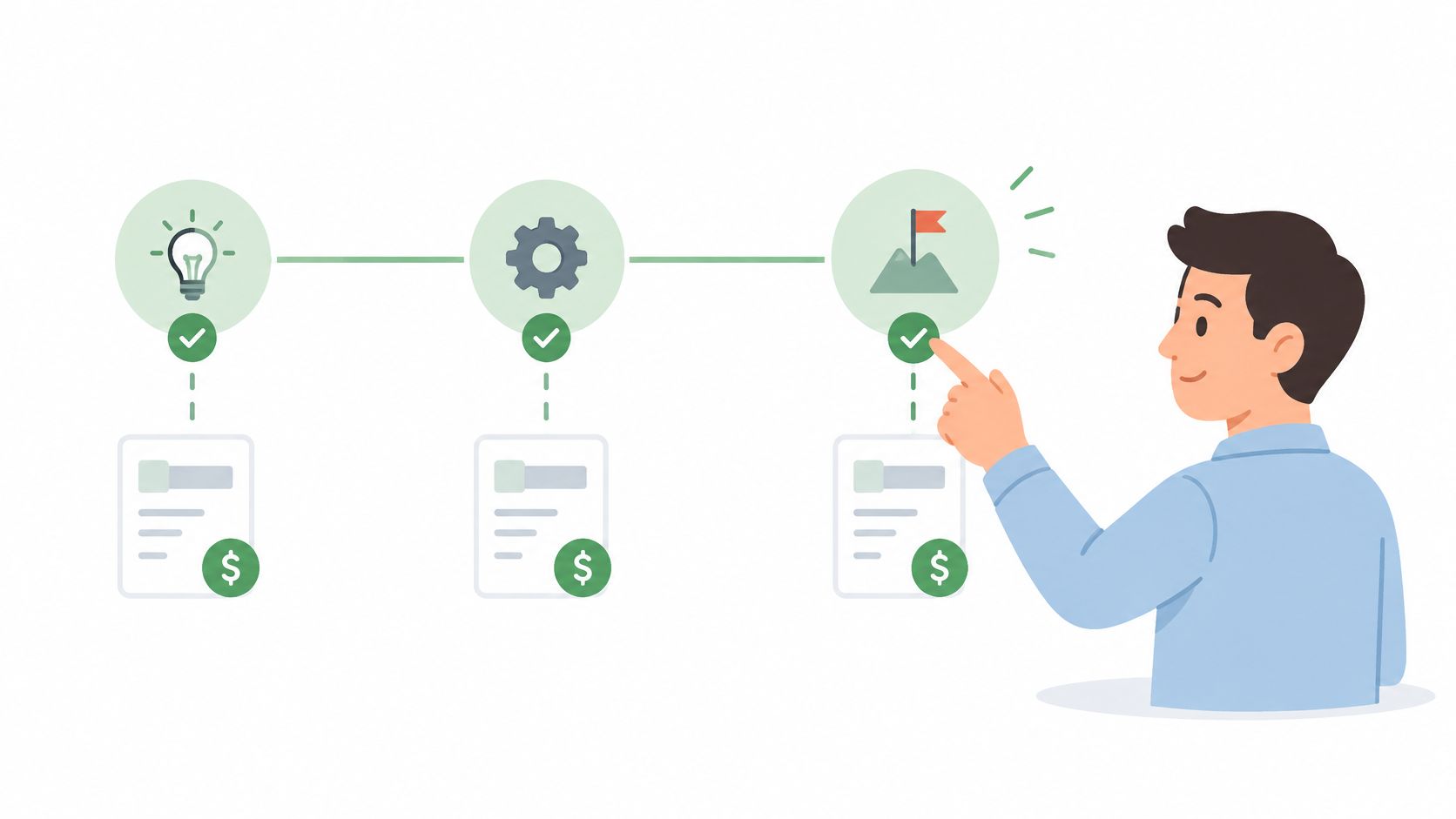
A project contract may divide payment into 30 percent at kickoff, 40 percent at beta, and 30 percent at launch. Each invoice is due when its named phase is reached and accepted. For reconciliation, match the bank credit to that milestone's invoice, not just to the project's total contract value.
If the deposit is short, record it as a partial payment and leave the milestone balance open. Closing the invoice because “most of the money arrived” can hide an unpaid amount. An architecture firm can use the same check: match each credit to the approved design phase and its invoice.
The European Commission's explanatory notes on invoicing address the authenticity of an invoice's origin, the integrity of its content, and its legibility from issue through storage. Keep signed milestone acceptance with the invoice as a practical record connecting the billed phase to its approval.
What has to sit on the invoice
- Identify the phase: Include the milestone name and contract number on each invoice.
- Keep its acceptance record: Store the signed approval with the invoice and bank statement.
- Match each deposit: Apply partial payments to the right milestone and leave any remaining balance open.
Do not invoice a later phase just to bring cash in sooner. The deposit would arrive before that phase was earned, and invoicing it again after acceptance could count the same work twice.
4. Time-and-Materials Billing
Hours drive the total. We charge agreed hourly or daily rates plus materials, usually once a month, with the timesheet behind the lines. Scope can move. The deposit cannot be matched until the hours are.
A legal team bills attorney and paralegal time for the month. An IT provider bills technician hours and the parts used on site. We start with the timesheet, tie the hours to payroll or the time system, and only then look for a credit that equals the approved invoice. A deposit that matches a round estimate, rather than the timesheet, is the wrong cash.
The European Commission invoicing guidance says a full VAT invoice must identify the goods or services, quantities where relevant, the unit price excluding tax, the VAT rate, and the VAT amount payable. A simplified invoice can stop at the type of supply and the VAT amount, or the figures needed to calculate it. Time and materials needs the full version. Hours and rates are the quantity. What belongs on that bill is set out in what is on an invoice.
- Attach the timesheet: It stays with the invoice and the bank record.
- Cap the engagement: A not-to-exceed amount keeps a runaway month from becoming a payment dispute.
- Hours before cash: Reconcile invoiced hours to time tracking before the payment is posted.
If the timesheet and the invoice disagree, the deposit cannot win. Fix the bill, or document the write-off.
5. Retainer Billing
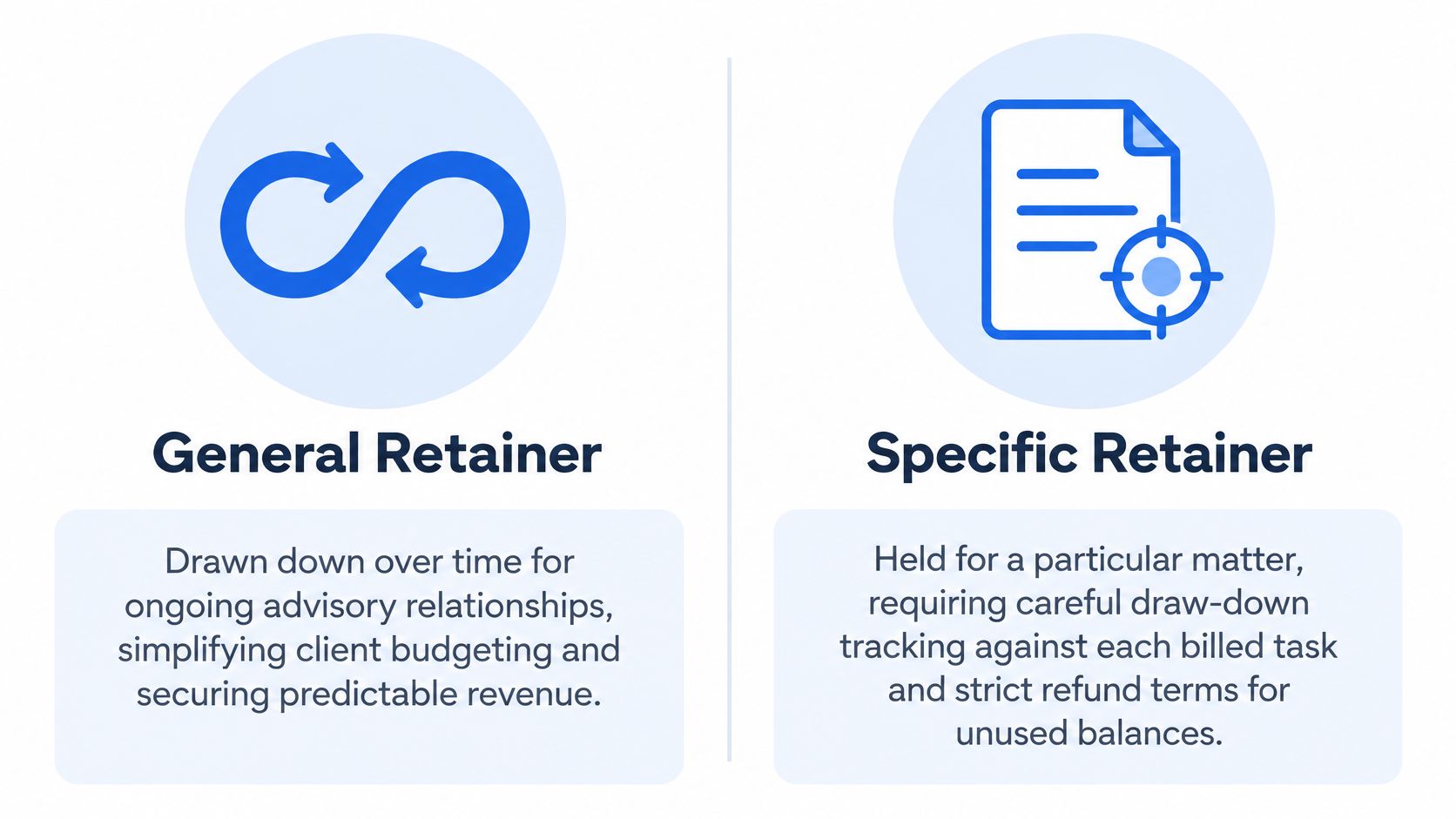
Cash arrives before the work is earned. That single fact is the reconciliation problem. The client pays an upfront or repeating advance. We draw the balance down as work is done and invoice again when it falls under the agreed floor. A general retainer is drawn over time. A specific retainer is held for one matter. In both cases the deposit and recognized revenue do not land in the same period. Until it is earned, the retainer is a liability or deferred revenue.
A virtual CFO firm collects a monthly retainer for oversight and advisory hours. A law firm holds a general retainer for ongoing counsel. The bank credit equals the retainer invoice. It does not equal this month's earned fees. Posting that credit straight to income makes the month look strong and the liability look empty.
Two balances, two checks
We keep a retainer ledger and tie it to the original deposit, not to later operating receipts that happen to be the same size. Draw-downs need dated work records. At each period end we review unused balances and write down the refund decision, including a decision to keep the funds under the contract.
Unused retainer cash is not spare income. It is still the client's money until the work records say otherwise.
6. Progress Billing
Progress billing, also called interim billing, lets a contractor invoice for work measured to date, usually every month. The application shows the value completed, materials stored, retainage held back, and the net due. Jobs run for months. Cash has to follow measured progress, or the job starves.
A general contractor submits a monthly application against a schedule of values. An engineering firm bills percent complete on a design contract. The statement should show the net after retainage, not the gross contract and not the gross application. We book retainage as its own receivable. Match the deposit to the gross and the cash account, or the receivable, stays wrong for the rest of the job.
Public work makes the paperwork stricter. In 2023, Eurostat figures in a Council of the European Union working paper put the share of enterprises with at least 10 employees sending or receiving eInvoices from 14.8% in Poland to 97.5% in Italy, with public-procurement rules among the reasons. Whatever the format, the application still has to equal the net credit.
- Application first: Each payment ties to the approved pay application.
- Retainage apart: Track it as a separate receivable, never as a quiet write-off.
- Running schedule: Cumulative billing has to foot to the schedule of values before the period closes.
7. Usage-Based Metered Billing
The bill follows consumption. API calls, storage, transactions, or pages processed become the quantity. The invoice is cut at period end from the meter. Totals jump around, so a "same as last month" check is useless.
A cloud host bills compute hours and storage used. A document shop bills per page converted. Both need the usage quantity, the unit rate, the period dates, and any minimum commitment on the face of the invoice. We match the meter report to the invoice first. Only then do we match the invoice to the bank. A deposit that equals last month, while this month's meter moved, is a coincidence.
Peppol, as described in Comarch's e-invoicing guide, reports that moving from unstructured documents to structured e-invoices can save roughly €5 to €9 per invoice. Structured lines keep quantity, tax, and totals readable by the ledger. A tidy PDF with no quantity still has to be keyed, and keyed totals are where metered bills go wrong.
- Show the meter: Quantity, unit rate, and period dates go on every invoice.
- Report before cash: Meter totals must equal the invoice before the deposit is applied.
- Watch the spikes: Alerts for unusually high or low usage catch a bad meter before the client does.
8. Consolidated Periodic Billing
Many orders become one invoice and, if the customer behaves, one credit. A supplier bills a restaurant group once a month for every delivery. A freight firm rolls shipments into a weekly invoice. Invoice volume drops for both sides. The match gets harder, because one bank credit has to explain a stack of transactions.
We will not close on the header total alone. We need a transaction-level schedule, a cutoff agreed in writing, and a credit that equals the sum of that schedule. A credit that equals the header while a delivery sits on the wrong side of cutoff is a false clear. It comes back next month as a dispute.
HM Revenue and Customs research found that in 2025, 29% of surveyed UK small and medium-sized enterprises reported using e-invoicing, 15% sent e-invoices, and 24% received them. Plenty of consolidated bills still arrive as a PDF list. We treat that list as the subledger.
- Schedule under the header: Every deposit traces to the underlying items.
- Cutoff in writing: The week ending or month ending is agreed before the first consolidated bill.
- Sum the lines: The statement credit equals the schedule before the period is closed.
How the eight invoicing types compare for bookkeeping
| Item | Billing trigger | Typical payment pattern | Reconciliation focus |
|---|---|---|---|
| Standard Net-Term Invoicing | Goods or services delivered; invoice issued | One payment due within set net terms; may be partial or late | Match each bank receipt to an open invoice |
| Recurring Subscription Billing | Scheduled billing cycle | Automatic card or direct-debit payments, typically monthly or annually | Review payouts, fees, failed payments, refunds, and plan changes |
| Milestone Billing | Defined project milestone accepted | Payments tied to contract milestones; may include an upfront deposit | Match deposits to milestone invoices and acceptance records |
| Time-and-Materials Billing | Hours worked and materials or expenses incurred | Periodic invoicing, commonly monthly | Check timesheets and expenses against approved invoices and deposits |
| Retainer Billing | Advance received or retainer balance needs replenishment | Upfront or recurring advance, drawn down as work is billed | Reconcile deposits and draw-downs to the retainer balance; track deferred revenue |
| Progress Billing | Work completed during a project period | Periodic payments based on measured progress, often net of retainage | Match payments to approved applications and track retainage separately |
| Usage-Based (Metered) Billing | Measured consumption during a billing period | Variable payment based on usage, usually billed at period end | Match usage reports and rates to invoice totals and bank receipts |
| Consolidated Periodic Billing | Billing period ends after multiple transactions | One payment for a consolidated invoice, often weekly or monthly | Match the bank credit to the invoice and its underlying transactions |
Matching Each Invoicing Model to Its Bank Record
Go back to the credit on the 28th. The invoice date was early in the month. The amounts disagreed. The close procedure was fine. The model decided which figures were allowed to differ, and which check proves the match.
Net-term work clears on a single credit, or on a split when the remittance names more than one invoice number. Subscription cash is a payout, so fees come off before the gross is treated as paid. A milestone should equal one accepted phase. Time and materials should equal approved hours and materials, not a figure the client rounded. Retainer cash stays on a liability ledger until draw-downs earn it. Progress billing is the net on the statement, with retainage held as its own receivable against a schedule of values. Metered usage starts with the usage report, then the bank. A consolidated bill is one credit equaling the sum of the schedule.
The proof every model shares
We do not post until the statement foots. Opening balance plus credits minus debits equals the closing balance. Fail that test and a page is missing, a line was dropped, or the PDF was read wrong. A perfect invoice match on a broken statement is still a bad close.
Foot the statement before you clear a single invoice. The model check comes second.
Monthly volume is where retyping breaks the close. autobankstatement converts PDF bank statements, including digital files, scans read with OCR, and password-protected files, into CSV or Excel. Files can run up to 25 MB, and bulk upload covers a client batch in one session. The guest preview shows the table before payment, so the balance identity can be tested first. Registered users keep download access for 24 hours, and uploads delete automatically within 24 hours. For a repeating close, choose the subscription after that preview looks right.
Tax reporting stays a separate job from the cash match. OECD data published in 2024 reported that electronic invoicing was permitted in all OECD countries and mandatory, in some form, in 29 countries. Among 35 countries requiring electronic transactional reporting, 17 required systematic transmission to tax authorities, and 11 required it in near real time. A deposit that foots does not file the return. It tells us the cash is real.
When the invoice and the deposit still disagree, start from a statement you can foot. autobankstatement turns PDF bank statements into CSV or Excel so opening balances, credits, debits, and closing balances sit in rows you can test against each invoicing model. Preview the table from this month's close, then match the cash before you post. Visit autobankstatement and run the statement first.
Convert your next statement in minutes
Upload a bank statement PDF — digital, scanned, or password-protected — preview the extracted table, and download clean CSV or Excel.